 Broderick Adams
Meet the Anaheim pepper with its gentle warmth, grassy sweetness, and remarkable versatility, the Anaheim pepper has earned a permanent spot in kitchens across the country. But behind this unassuming green pod lies a fascinating story of migration, agriculture, and a famous New Mexican cousin. Let's dig in.
Growing Habits
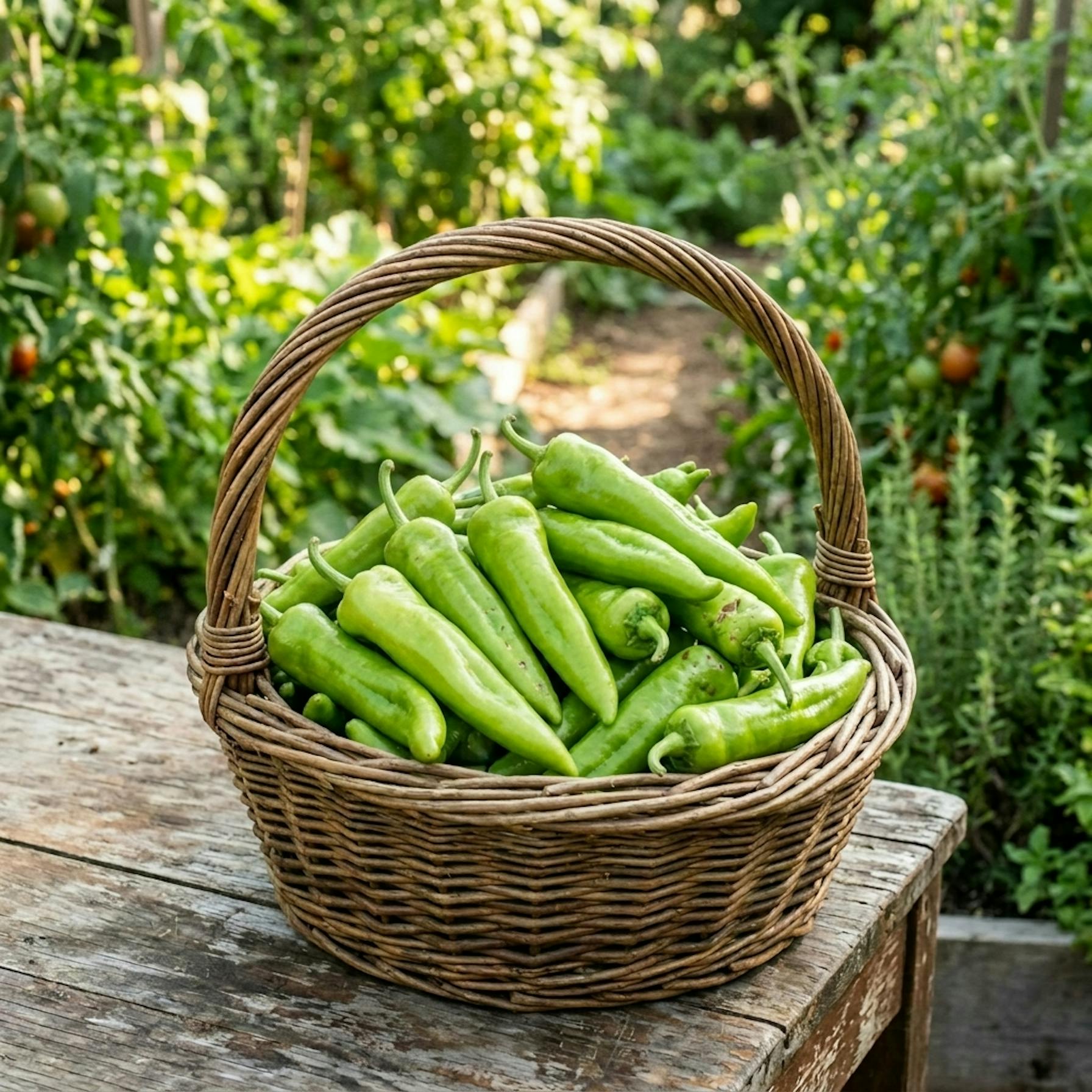
The Anaheim pepper (Capsicum annuum) is a long, slender chile that typically measures six to ten inches in length. It starts a glossy green and ripens to a deep red if left on the plant. Known for its mild heat—usually ranging from 500 to 2,500 Scoville Heat Units—the Anaheim is approachable for spice-shy eaters while still delivering plenty of flavor. Our plants have been absolutely prolific so if you are looking for a pepper that continues to produce heavily all through the season and is mild enough for any of your dinner guests, look no further!
A Little History (and a Trip West)
Despite its California name, the Anaheim pepper's roots run straight through New Mexico. In the early 1900s, a farmer named Emilio Ortega brought chile pepper seeds from New Mexico to the Anaheim, California area. The pepper flourished in its new home, and the name stuck. So while we call it the "Anaheim," its genetic story begins in the chile-loving soils of New Mexico—which brings us to its most famous relative.
The Hatch Connection
Here's where things get interesting. The Anaheim pepper is closely related to the legendary Hatch green chile. In fact, many Anaheim varieties descend from the same New Mexican chile cultivars that Hatch is famous for. The difference often comes down to one thing: where they're grown.
Why Hatch Tastes Like Hatch
Hatch green chiles take their name from the Hatch Valley in New Mexico, and their distinctive flavor is inseparable from that place. The region's high desert elevation, intense sunlight, cool nights, mineral-rich soil, and the waters of the Rio Grande all combine to create a chile with a deeper, smokier, more complex flavor than the same seeds would produce anywhere else. It's a textbook example of terroir—the idea that geography shapes flavor. You can plant Hatch seeds in another state, but you simply can't replicate the Hatch Valley itself.
Our Mild Variety: Born to Be Stuffed
On our farm, we grow a mild Anaheim variety specifically chosen for its gentle heat, thick walls, and generous size. These qualities make it absolutely perfect for stuffing. The sturdy flesh holds its shape beautifully in the oven, the wide cavity invites all kinds of fillings, and the mild heat lets the other ingredients shine. If you've been intimidated by spicier stuffed peppers, this is the variety that welcomes everyone to the table.
Nutrition: Small Pepper, Big Benefits
Anaheim peppers aren't just delicious—they're genuinely good for you. A single pepper is low in calories yet packed with nutrients, including:
- Vitamin C – supporting immune health and collagen production
- Vitamin A – great for vision and skin
- Vitamin B6 and folate – important for metabolism and cell function
- Capsaicin – the compound behind the mild heat, linked to anti-inflammatory and metabolism-boosting properties
- Fiber and antioxidants – supporting digestion and overall wellness
Preserving Your Anaheim Harvest
When you've got more peppers than you can eat fresh, preservation keeps the flavor going year-round. Here are the best methods:
- Roasting and freezing: Char the skins, peel, and freeze in batches. This locks in that smoky-sweet flavor and makes them ready to use anytime.
- Drying: Ripe red Anaheims can be dried and ground into a mild chile powder.
- Canning: Pickled Anaheim rings or whole roasted peppers in jars make a great pantry staple.
- Freezing raw: Slice or dice and freeze for easy additions to soups and stir-fries.
Weeknight Ways to Use Anaheim Peppers
Working Anaheims into your weekly cooking is easy. Try them:
- Diced into morning scrambles and breakfast burritos
- Roasted and layered into sandwiches and quesadillas
- Chopped into salsas, chili, and pots of beans
- Blended into creamy green chile sauces
- And, of course, stuffed and baked—our favorite use of all
Recipe: Shiitake-Stuffed Anaheim Peppers
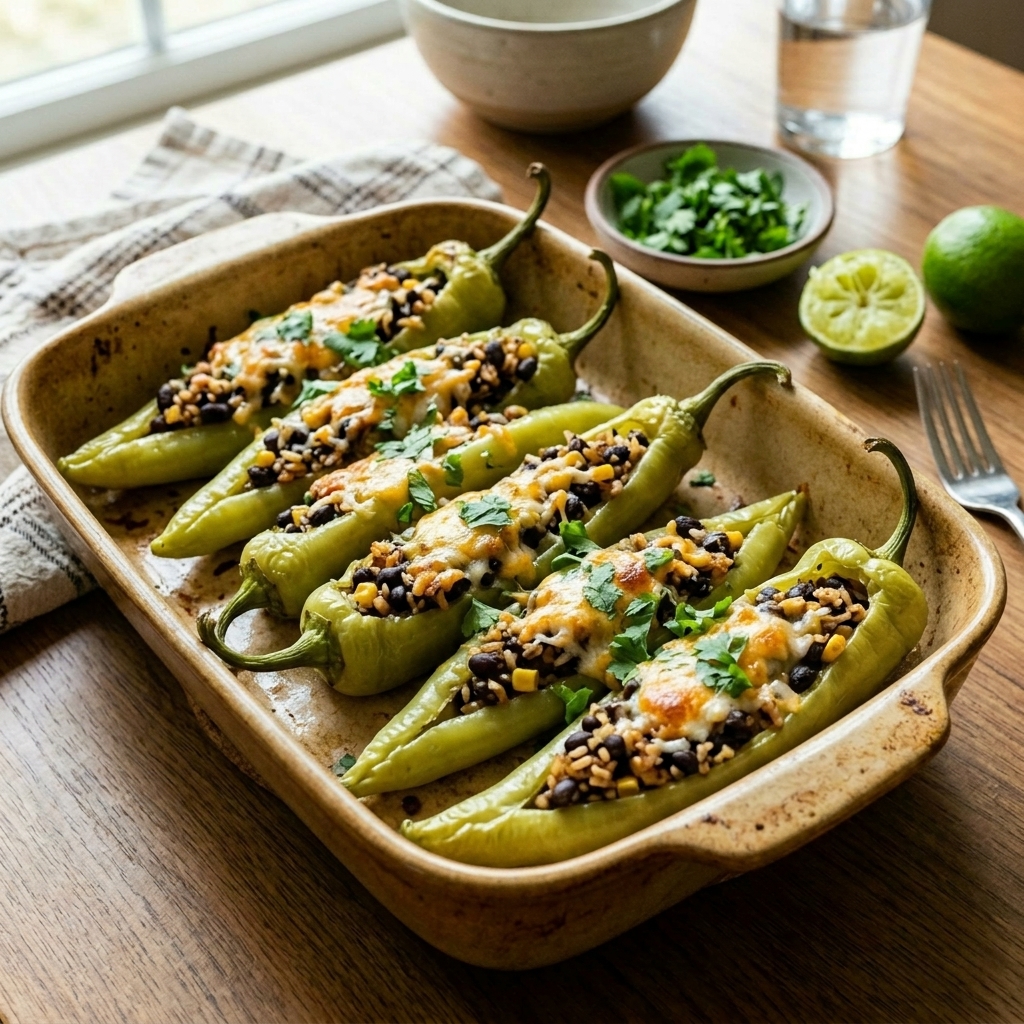
This vegetarian take on stuffed peppers swaps meat for meaty, savory shiitake mushrooms. The mushrooms bring a rich, umami depth that pairs perfectly with the mild Anaheim, while keeping the dish satisfying and plant-forward.
Ingredients
- 6 large mild Anaheim peppers
- 2 cups shiitake mushrooms, stems removed and finely chopped
- 1 cup cooked rice or quinoa
- 1 small onion, diced
- 3 cloves garlic, minced
- 1 cup black beans, drained and rinsed
- 1 cup shredded cheese (or a dairy-free alternative)
- 1 teaspoon ground cumin
- 1 teaspoon smoked paprika
- 2 tablespoons olive oil
- Salt and pepper to taste
- Fresh cilantro and lime wedges, for serving
Instructions
- Preheat your oven to 375°F (190°C).
- Slice a lengthwise slit in each Anaheim pepper and carefully remove the seeds, keeping the peppers intact.
- Heat olive oil in a skillet over medium heat. Add the onion and cook until softened, about 4 minutes.
- Add the garlic and chopped shiitake mushrooms. Cook until the mushrooms release their moisture and turn golden and meaty, about 6 to 8 minutes.
- Stir in the cumin, smoked paprika, black beans, and cooked rice. Season with salt and pepper. Cook for another 2 minutes to blend the flavors.
- Remove from heat and fold in half of the shredded cheese.
- Gently stuff each pepper with the shiitake mixture and place them in a baking dish. Top with the remaining cheese.
- Bake for 20 to 25 minutes, until the peppers are tender and the cheese is melted and bubbly.
- Garnish with fresh cilantro and a squeeze of lime. Serve warm.
The Bottom Line
The Anaheim pepper proves that mild doesn't mean boring. With a heritage tied to the famous chiles of New Mexico, a nice dose of nutrition, and an easy to approach pepper in the kitchen, it's a pepper worth growing, preserving, and cooking all season long. Whether you're stuffing them with savory shiitakes or roasting them for the freezer, the Anaheim provides in the garden and kitchen.
Happy growing—and happy cooking.
Did you make this recipe? Curious about how to use another ingredient in your kitchen?
Connect with us on social media and let us know by tagging #emorymarketgardens OR reach out to us via: